
Biliopancreatic Diversion with Duodenal Switch (BPD/DS)

Duration
2-3 hours
Downtime
2-4 weeks
Lasts for
Long-lasting

Insurance
Can be covered
Cost
20,000-30,000$
Setting
Inpatient
Overview
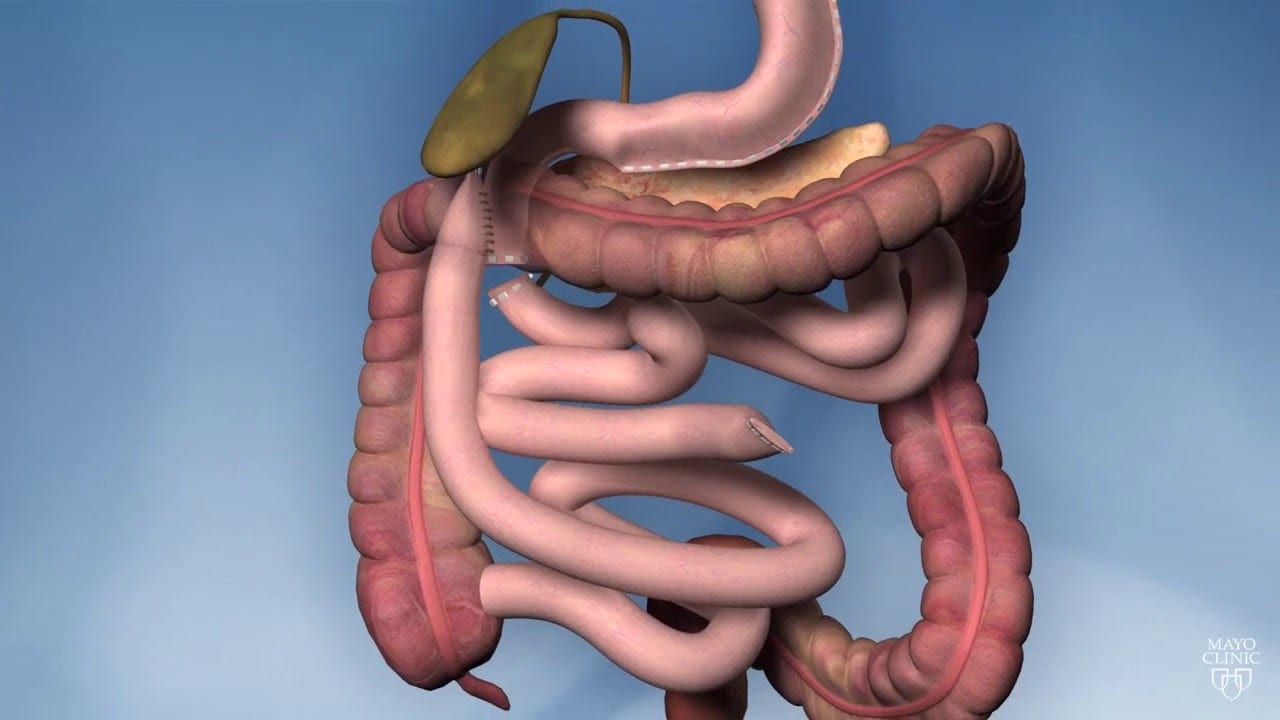
Biliopancreatic diversion with duodenal switch (BPD/DS) combines two approaches to help you lose weight. Your surgeon removes part of your stomach to limit how much you eat, then reroutes your intestines, making them shorter, so your body absorbs fewer calories. This surgery offers significant, long-lasting weight loss and often improves conditions like type 2 diabetes.
Candidates
BPD/DS is recommended it when losing weight is a priority and you can’t commit to a lifelong healthy lifestyle.
Patients should undergo this procedure if they have:
A BMI >35 kg/m².
A BMI lower than that with:
- One or more obesity-related conditions like type 2 diabetes, hypertension, or sleeping troubles.
- Failed weight loss after supervised diet treatment and exercise. Eisenberg, D., Shikora, S. A., Aarts, E., Aminian, A., Angrisani, L., Cohen, R. V., Luca, M. D., Faria, S. L., Goodpaster, K. P. S., Haddad, A., Himpens, J. M., Kow, L., Kurian, M., Loi, K., Mahawar, K., Nimeri, A., O’Kane, M., Papasavas, P. K., Ponce, J., … Kothari, S. N. (2022). 2022 American Society for Metabolic and Bariatric Surgery (ASMBS) and International Federation for the Surgery of Obesity and Metabolic Disorders (IFSO): Indications for Metabolic and Bariatric Surgery. Surgery for Obesity and Related Diseases, 18(12), 1345–1356. https://doi.org/10.1016/j.soard.2022.08.013
People with the following conditions should avoid BPD/DS:
- Eating disorders
- Blood clotting disorders
- Pregnancy
- Active alcohol or drug addiction
- Severe liver disease Heinberg, L. J., Ashton, K., & Coughlin, J. (2012). Alcohol and bariatric surgery: Review and suggested recommendations for assessment and management. Surgery for Obesity and Related Diseases, 8(3), 357–363. https://doi.org/10.1016/j.soard.2012.01.016 Ps, C., B, J., S, P., & P, B. (2002). Bariatric surgery for morbid obesity: Why, who, when, how, where, and then what? Cleveland Clinic Journal of Medicine, 69(11). https://doi.org/10.3949/ccjm.69.11.897
How Does it Work?
The procedure includes reshaping the stomach into a narrow tube (like a banana) and reroutes part of the small intestine, where most calorie absorption happens, to connect directly to the new stomach. The bypassed section stays in place to carry digestive fluids from the pancreas to the intestine.
This promotes weight loss in two ways: the smaller stomach helps feeling full faster, and the rerouted intestine absorbs fewer calories and nutrients from food.
Benefits
Weight loss: ~70% excess weight loss, which is superior to other weight loss surgeries. Buchwald, H., Avidor, Y., Braunwald, E., Jensen, M. D., Pories, W., Fahrbach, K., & Schoelles, K. (2004). Bariatric surgery: A systematic review and meta-analysis. JAMA, 292(14), 1724–1737. https://doi.org/10.1001/jama.292.14.1724
Diabetes type 2 remission: 95% of diabetic people had a complete resolution (the most effective bariatric surgery). Buchwald, H., Estok, R., Fahrbach, K., Banel, D., Jensen, M. D., Pories, W. J., Bantle, J. P., & Sledge, I. (2009). Weight and type 2 diabetes after bariatric surgery: Systematic review and meta-analysis. The American Journal of Medicine, 122(3), 248-256.e5. https://doi.org/10.1016/j.amjmed.2008.09.041
Procedure Types
There are two main versions of this surgery:
Traditional Duodenal Switch (BPD-DS)
The original technique with two intestinal openings
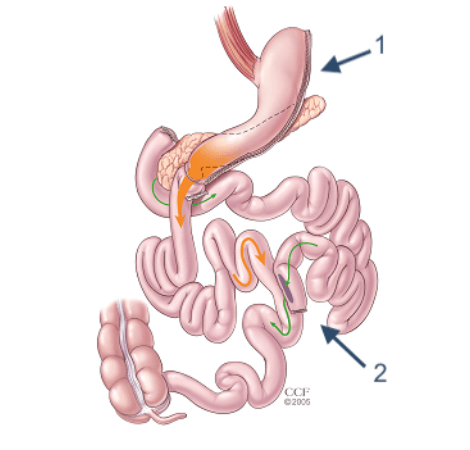
This is the more complex approach and takes more time to operate.
Single-Anastomosis Duodenal Switch (SADI-S)
A newer, simplified version with one intestinal opening
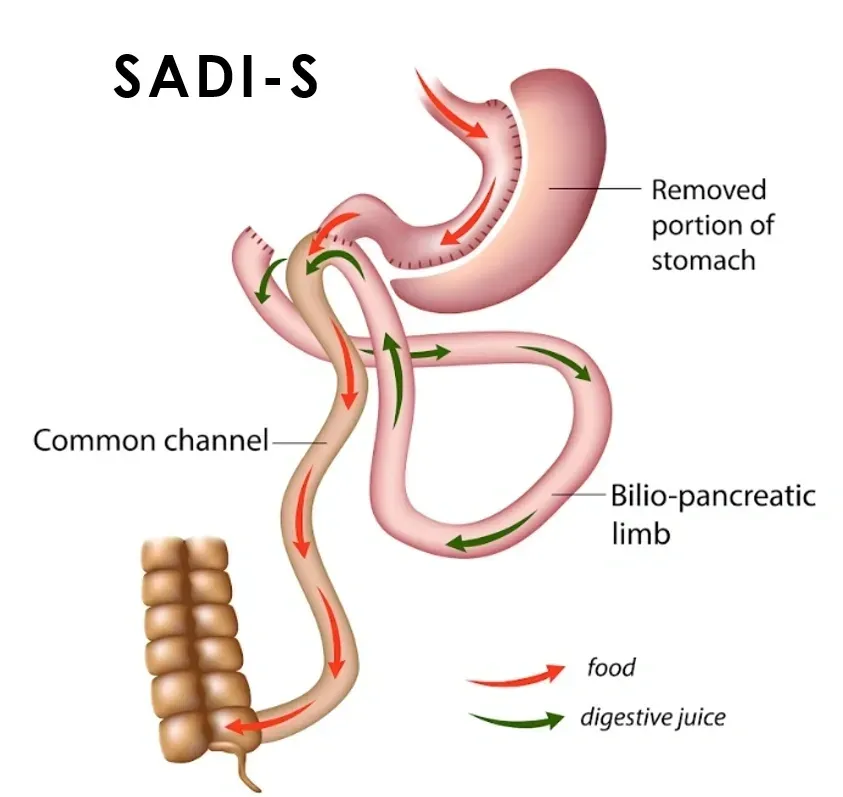
It is a less complex surgery and takes less operative time. Axer, S., Al-Tai, S., Ihle, C., Alwan, M., & Hoffmann, L. (2024). Perioperative Safety and 1-Year Outcomes of Single-Anastomosis Duodeno-Ileal Bypass (SADI) vs. Biliopancreatic Diversion with Duodenal Switch (BPD/DS): A Randomized Clinical Trial. Obesity Surgery, 34(9), 3382–3389. https://doi.org/10.1007/s11695-024-07421-z Verhoeff, K., Mocanu, V., Zalasky, A., Dang, J., Kung, J. Y., Switzer, N. J., Birch, D. W., & Karmali, S. (2022). Evaluation of Metabolic Outcomes Following SADI-S: A Systematic Review and Meta-analysis. Obesity Surgery, 32(4), 1049–1063. https://doi.org/10.1007/s11695-021-05824-w
Both surgeries include a sleeve gastrectomy (making your stomach smaller) combined with rerouting part of your intestines to reduce calorie absorption. And they have comparable outcomes and complication rate. Pereira, A. M., S. Pereira, S., Nora, M., F. Almeida, R., P. Monteiro, M., & Guimarães, M. (2025). Long-Term Outcomes of Single and Dual Anastomosis Duodenal Switch. Obesity Surgery, 35(9), 3791–3800. https://doi.org/10.1007/s11695-025-08114-x
Risks
While BPD-DS produces the greatest weight loss among bariatric procedures, it carries higher complication rates, especially nutritional deficiencies (like vitamins, iron,...). Möller, F., Hedberg, J., Skogar, M., & Sundbom, M. (2023). Long-term Follow-up 15 Years After Duodenal Switch or Gastric Bypass for Super Obesity: A Randomized Controlled Trial. Obesity Surgery, 33(10), 2981–2990. https://doi.org/10.1007/s11695-023-06767-0 Salte, O. B. K., Olbers, T., Risstad, H., Fagerland, M. W., Søvik, T. T., Blom-Høgestøl, I. K., Kristinsson, J. A., Engström, M., & Mala, T. (2024). Ten-Year Outcomes Following Roux-en-Y Gastric Bypass vs Duodenal Switch for High Body Mass Index. JAMA Network Open, 7(6), e2414340. https://doi.org/10.1001/jamanetworkopen.2024.14340
Main complications:
Complication | % |
|---|---|
Vitamin D deficiency | |
Anemia | |
Vitamin A deficiency | |
Calcium deficiency | |
leak at the surgical connection site |
Other surgery-related complications include: postoperative bleeding- infection- swelling. Möller, F., Hedberg, J., Skogar, M., & Sundbom, M. (2023). Long-term Follow-up 15 Years After Duodenal Switch or Gastric Bypass for Super Obesity: A Randomized Controlled Trial. Obesity Surgery, 33(10), 2981–2990. https://doi.org/10.1007/s11695-023-06767-0 Skogar, M. L., & Sundbom, M. (2020). Early complications, long-term adverse events, and quality of life after duodenal switch and gastric bypass in a matched national cohort. Surgery for Obesity and Related Diseases: Official Journal of the American Society for Bariatric Surgery, 16(5), 614–619. https://doi.org/10.1016/j.soard.2020.02.001
Results
Your weight loss timeline will look like this:
First 3 months
Most rapid weight loss period; approximately 30% of excess weight.
6 months after
Continued significant weight loss.
12 months after
50-75% of excess weight loss expected.
Chapter references
- 1
- 2
- 3
- 4
- 5
Navigation: