
Laparoscopic Gastric Plication (LGP)

Duration
1-3 hours
Downtime
2-3 weeks

Cost
7,000–15,000$
Overview
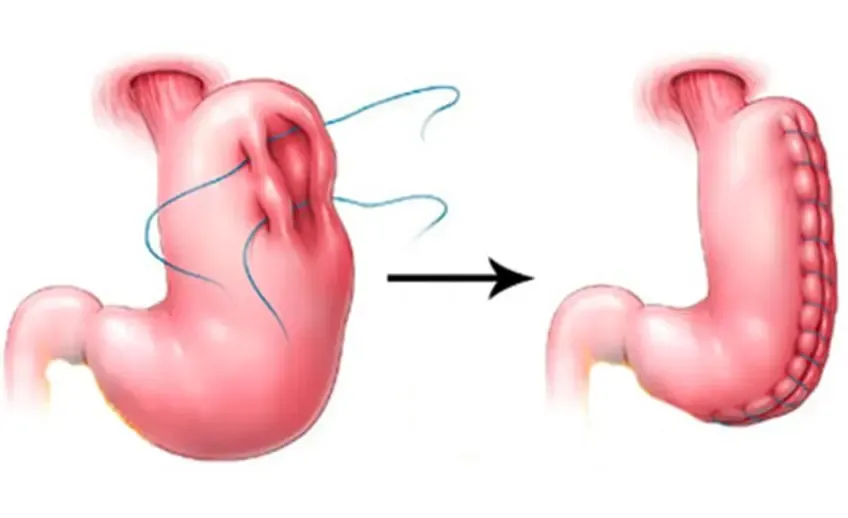
Laparoscopic gastric plication is a weight-loss procedure where your surgeon folds your stomach inward to make it smaller. This helps you eat less and feel full faster.
Candidates
Patients often consider LGP because it costs less than similar surgeries like Laparoscopic Sleeve Gastrectomy Suarez, D. F., & Gangemi, A. (2021). How Bad Is “Bad”? A Cost Consideration and Review of Laparoscopic Gastric Plication Versus Laparoscopic Sleeve Gastrectomy. Obesity Surgery, 31(1), 307–316. https://doi.org/10.1007/s11695-020-05018-w and produces noticeable short-term weight loss, with patients losing 35% to 77.1% of their excess weight in the first year. El Soueidy, T., Kassir, R., Nakhoul, M., Balian, A., Nunziante, M., Safieddine, M., Perlemuter, G., Lainas, P., & Dagher, I. (2021). Laparoscopic Greater Curvature Plication for the Treatment of Obesity: A Systematic Review. Obesity Surgery, 31(3), 1168–1182. https://doi.org/10.1007/s11695-020-05112-z
Is this procedure effective?
While weight loss results might seem promising, there are several issues associated with this procedure that must be considered.
Less durability: LGP produces less durable weight loss than other bariatric procedures. Barrichello, S., Minata, M. K., García Ruiz de Gordejuela, A., Bernardo, W. M., de Souza, T. F., Galvão Neto, M., Hourneaux de Moura, D. T., Santo, M. A., & Hourneaux de Moura, E. G. (2018). Laparoscopic Greater Curvature Plication and Laparoscopic Sleeve Gastrectomy Treatments for Obesity: Systematic Review and Meta-Analysis of Short- and Mid-Term Results. Obesity Surgery, 28(10), 3199–3212. https://doi.org/10.1007/s11695-018-3330-9 L, D., Y, F., H, L., Y, Z., D, Q., S, T., J, C., Q, H., C, Z., & M, L. (2020). Comparative effectiveness of bariatric surgeries in patients with obesity and type 2 diabetes mellitus: A network meta-analysis of randomized controlled trials. Obesity Reviews : An Official Journal of the International Association for the Study of Obesity, 21(8). https://doi.org/10.1111/obr.13030 Li, H., Wang, J., Wang, W., Wang, X., Xu, Z., Li, H., & Wu, H. (2021). Comparison Between Laparoscopic Sleeve Gastrectomy and Laparoscopic Greater Curvature Plication Treatments for Obesity: An Updated Systematic Review and Meta-Analysis. Obesity Surgery, 31(9), 4142–4158. https://doi.org/10.1007/s11695-021-05538-z Perivoliotis, K., Sioka, E., Katsogridaki, G., & Zacharoulis, D. (2018). Laparoscopic Gastric Plication versus Laparoscopic Sleeve Gastrectomy: An Up-to-Date Systematic Review and Meta-Analysis. Journal of Obesity, 2018, 3617458. https://doi.org/10.1155/2018/3617458 Excess weight loss drops from approximately 70% at one year to just 40% after ten years. Talebpour, M., Motamedi, S. M. K., Talebpour, A., & Vahidi, H. (2012). Twelve year experience of laparoscopic gastric plication in morbid obesity: Development of the technique and patient outcomes. Annals of Surgical Innovation and Research, 6(1), 7. https://doi.org/10.1186/1750-1164-6-7
Weight Regain and Reoperation: ~30% of patients regain significant weight over time, Talebpour, M., Motamedi, S. M. K., Talebpour, A., & Vahidi, H. (2012). Twelve year experience of laparoscopic gastric plication in morbid obesity: Development of the technique and patient outcomes. Annals of Surgical Innovation and Research, 6(1), 7. https://doi.org/10.1186/1750-1164-6-7 and 10.2% require a second operation. Suarez, D. F., & Gangemi, A. (2021). How Bad Is “Bad”? A Cost Consideration and Review of Laparoscopic Gastric Plication Versus Laparoscopic Sleeve Gastrectomy. Obesity Surgery, 31(1), 307–316. https://doi.org/10.1007/s11695-020-05018-w
No effect on Diabetes Type 2: Diabetic patients who got LGP showed no significant improvement after the procedure. Meyer, H. H. G., Riauka, R., Dambrauskas, Z., & Mickevicius, A. (2021). The effect of surgical gastric plication on obesity and diabetes mellitus type 2: A systematic review and meta-analysis. Wideochirurgia I Inne Techniki Maloinwazyjne = Videosurgery and Other Miniinvasive Techniques, 16(1), 10–18. https://doi.org/10.5114/wiitm.2020.97424
How Does it Work?
The stomach is folded inward and stitched in place through small incisions in your abdomen. This reduces your stomach's size, so you feel full faster and eat less. Unlike other weight loss surgeries, this procedure does not involve removing any part of your stomach or rerouting your intestines.
Common Misconceptions
LGP is the same as endoscopic sleeve gastroplasty.
While they are similar in concept, LGP folds the stomach from the outside and includes making surgical cuts on the abdomen. Endoscopic sleeve gastroplasty, on the other hand, is done entirely through the mouth and the stomach is folded from the inside.
LGP is a definitive solution for obesity.
The procedure does not provide long-term weight loss, and weight regain is high.
It replaces healthy habits.
LGP is not enough alone. Long‑term success still depends on diet, exercise and behavioral therapy.
Risks
Gastric plication carries a higher complication rate than similar weight-loss surgeries. About 1 in 3 patients (32%) experience some form of complication. Barrichello, S., Minata, M. K., García Ruiz de Gordejuela, A., Bernardo, W. M., de Souza, T. F., Galvão Neto, M., Hourneaux de Moura, D. T., Santo, M. A., & Hourneaux de Moura, E. G. (2018). Laparoscopic Greater Curvature Plication and Laparoscopic Sleeve Gastrectomy Treatments for Obesity: Systematic Review and Meta-Analysis of Short- and Mid-Term Results. Obesity Surgery, 28(10), 3199–3212. https://doi.org/10.1007/s11695-018-3330-9 Perivoliotis, K., Sioka, E., Katsogridaki, G., & Zacharoulis, D. (2018). Laparoscopic Gastric Plication versus Laparoscopic Sleeve Gastrectomy: An Up-to-Date Systematic Review and Meta-Analysis. Journal of Obesity, 2018, 3617458. https://doi.org/10.1155/2018/3617458
Most complications are mild (~29%). You may experience nausea, vomiting, excess drooling, or minor bleeding. These typically resolve within a few days without intervention. El Soueidy, T., Kassir, R., Nakhoul, M., Balian, A., Nunziante, M., Safieddine, M., Perlemuter, G., Lainas, P., & Dagher, I. (2021). Laparoscopic Greater Curvature Plication for the Treatment of Obesity: A Systematic Review. Obesity Surgery, 31(3), 1168–1182. https://doi.org/10.1007/s11695-020-05112-z Suarez, D. F., & Gangemi, A. (2021). How Bad Is “Bad”? A Cost Consideration and Review of Laparoscopic Gastric Plication Versus Laparoscopic Sleeve Gastrectomy. Obesity Surgery, 31(1), 307–316. https://doi.org/10.1007/s11695-020-05018-w
Serious complications are less common (~7%) but may require further intervention. These include stomach blockage, the folded stomach wall slipping out of place, or severe bleeding. El Soueidy, T., Kassir, R., Nakhoul, M., Balian, A., Nunziante, M., Safieddine, M., Perlemuter, G., Lainas, P., & Dagher, I. (2021). Laparoscopic Greater Curvature Plication for the Treatment of Obesity: A Systematic Review. Obesity Surgery, 31(3), 1168–1182. https://doi.org/10.1007/s11695-020-05112-z Suarez, D. F., & Gangemi, A. (2021). How Bad Is “Bad”? A Cost Consideration and Review of Laparoscopic Gastric Plication Versus Laparoscopic Sleeve Gastrectomy. Obesity Surgery, 31(1), 307–316. https://doi.org/10.1007/s11695-020-05018-w
Chapter references
- 1
- 2
- 3
- 4
- 5
Navigation: